Perhaps the biggest shift is Google’s testing of advertisements within AI-powered Search experiences. Ratherthan appearing only alongside search results, ads can bAdvertisinge integrated into conversationaSearch l responses where appropriate, creating new opportunities for discovery.
GOOGLE ADS :A GUIDE TO CREATE COMPLETE CAMPAIGN WITH AI
Creating a Winning Google Ads Strategy
A successful Google Ads strategy begins with understanding customer intent rather than simply choosing keywords. Advertisers should build campaigns around user problems, purchasing behavior, and desired outcomes.
Keyword Research
Effective keyword research combines commercial intent, search volume, competition analysis, and relevance. Long-tail keywords frequently produce higher conversion rates because they reflect specific user needs.
Ad Copy Optimization
Strong advertisements include:
- Clear value propositions
- Relevant keywords
- Compelling calls-to-action
- Trust indicators
- Unique selling points
Testing multiple responsive search ads allows Google’s machine learning to identify the highest-performing combinations.
Landing Page Best Practices
Even outstanding advertisements fail if landing pages disappoint visitors. Landing pages should load quickly, match ad messaging, provide clear calls-to-action, and simplify conversion paths.Creating Profitable Campaigns with AI
Article Outline
- H1: Google Ads: The Complete 2026 Guide to Creating Profitable Campaigns with AI
- H2: Understanding Google Ads
- H3: What Google Ads Is
- H3: How the Google Ads Auction Works
- H2: Why Businesses Still Invest in Google Ads
- H3: Benefits for Small Businesses
- H3: Enterprise Advertising Advantagesentire inventory into one AI-driven campaign. Recent updates introduced expanded reporting, new experimentation features, and improved optimization capabilities.
- AI-Powered Google Ads in 2026
- Artificial intelligence has transformed nearly every aspect of Google Ads.
- AI Max and Smart Bidding
- Google continues expanding AI Max, enabling advertisers to guide AI using natural language instructions while improving campaign expansion and performance steering. Smart Bidding uses machine learning to adjust bids based on thousands of real-time signals, helping advertisers optimize for conversions rather than manual bid adjustments.
- Gemini-Powered Creative Features
- Gemini now assists advertisers by generating headlines, descriptions, images, and creative assets. These tools dramatically reduce production time while allowing marketers to maintain consistent branding.
- H2: Google AdsGoogle Ads: The Complete 2026 Guide to Campaign Types
- H3: Search Campaigns
- H3: Display, Shopping, Video, and Demand Gen
- H3: Performance Max Campaigns
- H2: AI-Powered Google Ads in 2026
- H3: AI Max and Smart Bidding
- H3: Gemini-Powered Creative Features
- H3: AI Search Advertising
- H2: Creating a Winning Google Ads Strategy
- H3: Keyword Research
- H3: Ad Copy Optimization
- H3: Landing Page Best Practices
- H2: Measuring Success
- H3: Key Performance Metrics
- H3: Common Mistakes to Avoid
- H2: Conclusion
- H2: FAQs
- H2: Understanding Google Ads
THE IMPORTANCE OF GOOGLE ADS
Google Ads: The Complete 2026 Guide to Creating Profitable Campaigns with AI
Understanding Google Ads
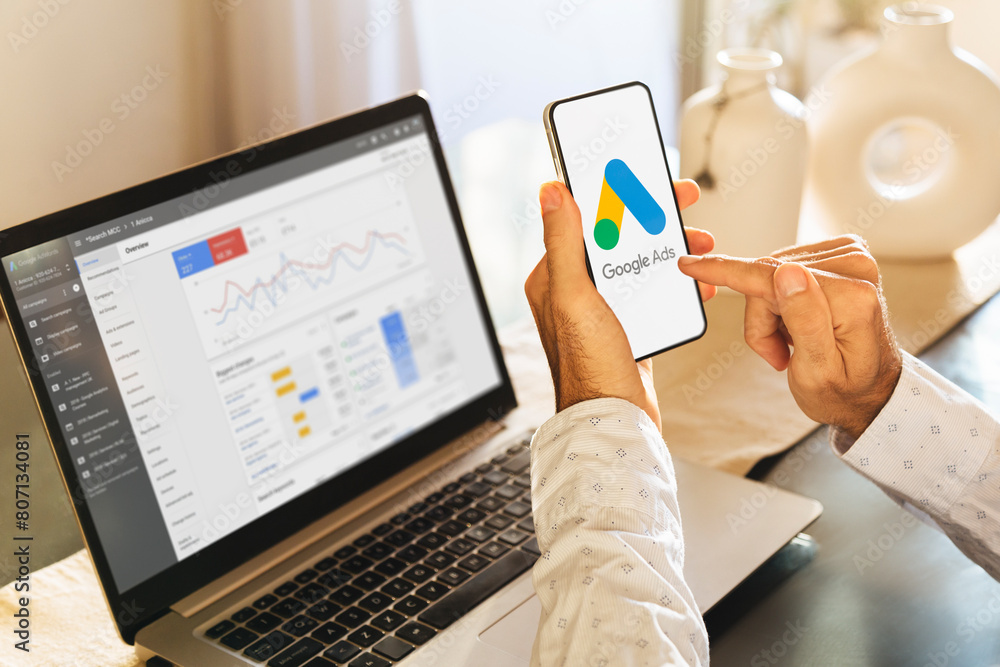
Google Ads remains one of the most effective digital advertising platforms because it connects businesses with people actively searching for products, services, or solutions. Unlike traditional advertising, where brands hope the right audience notices a message, Google Ads places advertisements in front of users at the exact moment they demonstrate buying intent. Whether someone searches for “best running shoes,” “dentist near me,” or “CRM software,” advertisers can compete to appear prominently in search results.
The platform has evolved dramatically over the last few years. Artificial intelligence now plays a central role in campaign optimization, bidding, audience targeting, and creative generation. Google announced major AI-focused improvements during Google Marketing Live 2026, including expanded AI Max, Gemini-powered creative tools, and new ad experiences within AI-powered Search. These innovations help advertisers automate complex tasks while maintaining performance and scale.
Google Ads operates on a pay-per-click (PPC) model in many campaign types, meaning advertisers generally pay only when someone interacts with their ad. However, success isn’t determined solely by budget. Google’s auction considers bid amount, ad quality, expected click-through rate, landing page experience, and ad relevance. This means smaller businesses can compete successfully against larger competitors by creating highly relevant campaigns that provide excellent user experiences.
What Google Ads Is
Google Ads is Google’s online advertising platform that allows businesses to promote products and services across Search, YouTube, Gmail, Google Maps, Discover, Display Network, and partner websites. Advertisers can target users based on keywords, interests, demographics, purchasing behavior, geographic location, devices, and numerous other signals.
How the Google Ads Auction Works
Every search triggers an automated auction completed within milliseconds. Google evaluates eligible ads and ranks them based on Ad Rank, which combines bid strategy, ad quality, expected impact of extensions, and relevance. This system rewards advertisers who prioritize user experience instead of relying purely on high spending.
Why Businesses Still Invest in Google Ads
Businesses continue investing billions of dollars in Google Ads because few marketing channels deliver comparable purchase intent. People searching Google usually have an immediate need. Someone typing “emergency plumber” or “buy gaming laptop” is significantly closer to making a purchase than someone casually scrolling social media.
Recent updates reinforce Google’s commitment to AI-driven advertising. Google has introduced AI-powered campaign management, enhanced measurement tools, improved Performance Max reporting, and conversational advertising experiences inside AI-powered Search. These developments expand advertiser reach while simplifying campaign management.
| Benefit | Why It Matters |
| High Intent | Users actively search for solutions |
| Flexible Budget | Suitable for startups and enterprises |
| Advanced Targeting | Reach specific audiences |
| Measurable Results | Detailed reporting and conversion tracking |
| AI Automation | Faster optimization with machine learning |
Benefits for Small Businesses
Small businesses appreciate Google Ads because campaigns can begin with modest budgets while still reaching local customers. Location targeting, call extensions, and local inventory ads help neighborhood businesses compete effectively.
Enterprise Advertising Advantages
Larger organizations benefit from automation, advanced attribution, audience segmentation, CRM integration, and cross-channel campaign management.
Google Ads Campaign Types
Google offers multiple campaign types designed for different marketing objectives.
Search Campaigns
Search campaigns display text advertisements on Google search results when users search relevant keywords. These campaigns generally provide the strongest purchase intent because users actively seek information.
Display, Shopping, Video, and Demand Gen
Display campaigns build awareness through Google ADS
BANNERS IN CAMPAIGNS
visual banners. Shopping campaigns showcase product images, prices, and merchant information. Video campaigns appear across YouTube, while Demand Gen campaigns leverage Google’s AI to engage audiences across YouTube, Discover, and Gmail.
Performance Max Campaigns
Performance Max has become one of Google’s flagship campaign types. It combines Google’s

Measuring Success
Campaign optimization depends on meaningful performance measurement rather than vanity metrics.
Key Performance Metrics
Important metrics include:
- Click-Through Rate (CTR)
- Conversion Rate
- Cost Per Click (CPC)
- Cost Per Acquisition (CPA)
- Return on Ad Spend (ROAS)
- Quality Score
- Impression Share
Modern advertisers increasingly combine these metrics with first-party customer data and enhanced conversion tracking for more accurate attribution. Google continues expanding AI-powered measurement capabilities to improve reporting across customer journeys.
Common Mistakes to Avoid
Common Google Ads mistakes include targeting overly broad keywords, ignoring negative keywords, failing to optimize landing pages, neglecting conversion tracking, and relying solely on automation without regular monitoring. AI can significantly improve efficiency, but human oversight remains essential for maintaining brand messaging, evaluating search terms, and interpreting busines
Conclusion
Google Ads continues evolving from a keyword-driven advertising platform into an AI-powered marketing ecosystem. Businesses now benefit from automation, predictive bidding, intelligent audience targeting, conversational search experiences, and generative creative tools. While artificial intelligence handles much of the operational complexity, successful advertisers still focus on understanding customers, creating valuable experiences, and measuring meaningful business outcomes.
Organizations that combine strong strategy with Google’s latest AI innovations are well-positioned to improve visibility, attract qualified customers, and maximize advertising return on investment. As Search becomes increasingly conversational and AI-driven, advertisers who embrace these changes early will likely gain a competitive advantage in the years ahead.
FAQs
1. Is Google Ads worth it for small businesses?
Yes. With proper targeting and optimization, even modest budgets can generate qualified leads and measurable sales.
2. How much does Google Ads cost?
There is no fixed cost. Advertisers choose their daily or monthly budgets, while costs depend on competition, keywords, and bidding strategies.
3. What is Performance Max?
Performance Max is Google’s AI-powered campaign type that automatically serves ads across Search, YouTube, Display, Gmail, Discover, Maps, and Shopping using a single campaign.
4. Can AI manage Google Ads automatically?
AI handles bidding, targeting, creative suggestions, and optimization, but marketers should still monitor performance, strategy, and brand alignment.
5. What are the biggest Google Ads updates in 2026?
Key updates include expanded AI Max, Gemini-powered creative generation, improved Performance Max reporting, AI-powered Search advertising formats, and enhanced measurement capabilities announced during Google Marketing Live 2026.
🔍 Want to find the best keywords and rank this article faster? Try the #1 SEO & AI visibility toolkit free for 14 Days . Track your keyword rankings, audit your site, and monitor your AI search visibility on ChatGPT, Gemini & Google AI Overviews
✨ Get better articles, faster. This prompt is powerful. But Pro Article Writer takes it further — AI humanizer, ull
advitors choose their daily or monthly budgets by geeting google ads